
Expected key results
We Have One Goal
to turn our KERs into practical tools and guidelines
that help European farmers, industry and policymakers build greener aquaculture and healthier food systems
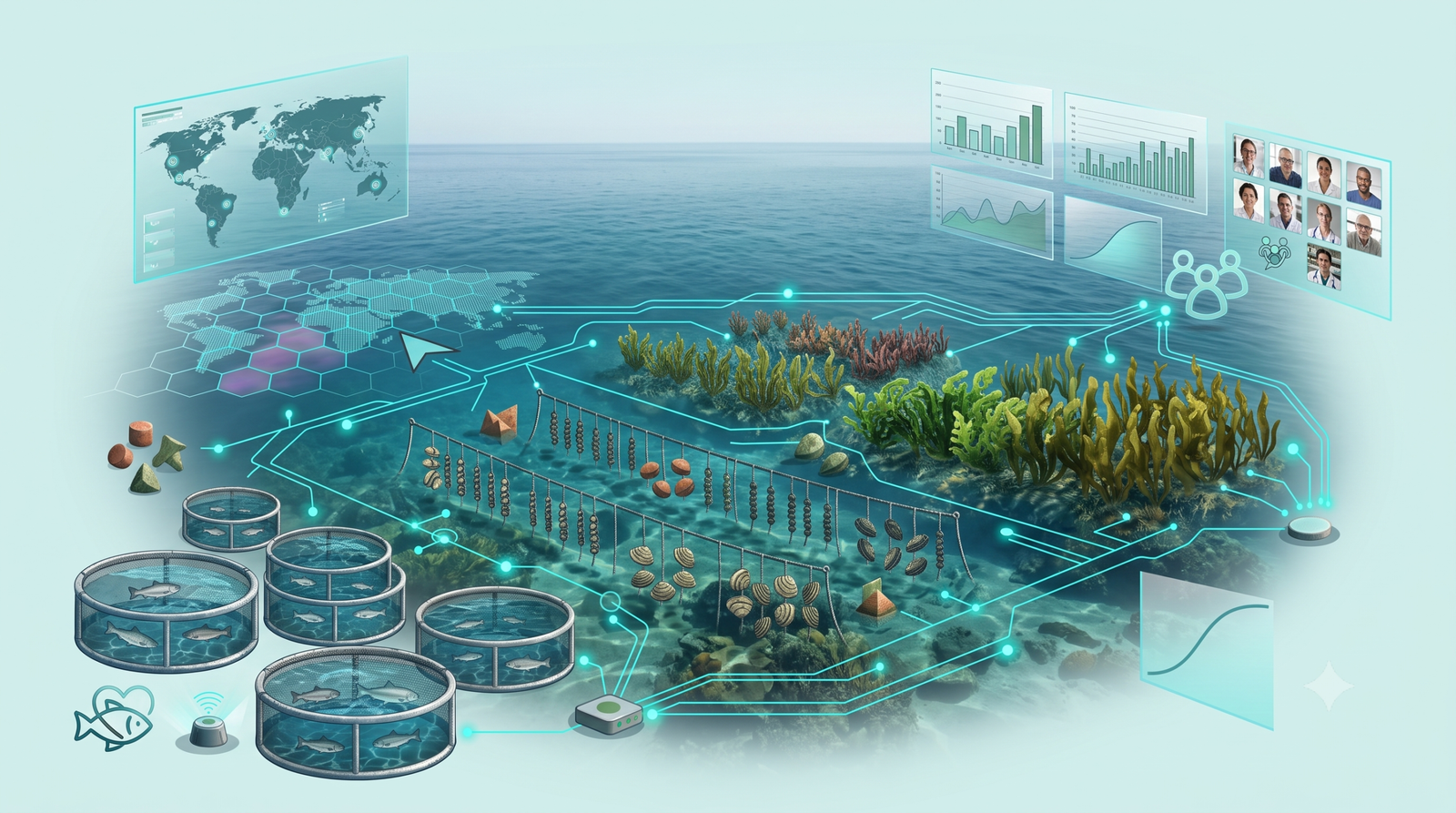
The KERs
KER 1
Policy recommendations for species diversification
Evidence-based suggestions for incorporating rabbitfish into national aquaculture strategies, including feed guidelines, cultivation systems, and sustainability potential.
KER 2
Novel circular low‑trophic level multi-functional feeds & feeding strategies applied to species-specific-farming systems
Multifunctional, circular feed recipes tailored to different aquatic species and farming systems that reduce dependence on limited raw ingredients and improve their welfare, health and growth performance.
KER 3
Geospatial early‑warning web service
A dedicated geospatial platform providing secure data storage, visualisation and interactive maps to deliver real‑time and forecast‑based environmental warnings to shellfish farmers.
KER 4
Bioenergetic models for improved farm management
Dynamic Energy Budget (DEB) models for species like grey mullet and seabass that predict growth, feed intake and oxygen demand, supporting better strategic farming decisions for fish performance and welfare.
KER 5
Functional feed formulations optimized for thermal‑resilient
Novel prototype aquafeeds incorporating with low‑trophic ingredients and bioactive compounds to increase fish resilience to climate‑driven temperature fluctuations while maintaining their growth and health.
KER 6
Standardised rabbitfish farming protocols
Development of standardised production benchmarks- (growth rate, FCR, survival) for rabbitfish species using functional feeds.
KER 7
Regionally adapted IMTA and LTA protocols
Develop operational guidelines for IMTA and low-trophic aquaculture systems tailored to inland, coastal, and epicontinental environments, enabling scalable farm diversification and supporting climate-resilient aquaculture production.
KER 8
Disease‑free clam seed for IMTA
Commercial‑scale production of selectively bred, thermotolerant, disease‑resistant clam (R. decussatus) seed and associated hatchery‑to‑grow‑out protocols supporting shellfish IMTA.
KER 9
Novel low‑trophic hatchery feed and cryopreservation protocol for barnacles
Standardised production and cryopreservation protocols for barnacle (B. creatus) larval feed, ensuring year‑round availability of high‑quality low‑trophic feed for hatcheries.
KER 10
Socio‑economic innovations for consumer acceptance/market uptake
Tools and insights on consumer acceptance, market uptake, governance and knowledge sharing to help producers introduce sustainable/high-quality aquatic IMTA/organic/aquaponic products and new low‑trophic species to the market.